
Dental Implants
Replace missing teeth with dental
implants in Calgary.
CBCT Imaging
In-house CBCT imaging for accurate diagnosis and implant planning.
Digital 3D Scanning
Precise digital scans for treatment planning.
X-Guide Navigation
Real-time surgical navigation for implant placement.
Personalized Care
Customized treatment plans designed around your needs.
A Strong Foundation for a Confident Smile.
Ready to explore your options?
Dental Implants?
Every patient is different.
Dental Implants may be used to
- Replace one missing tooth
- Replace several missing teeth
- Support a fixed dental bridge
- Stabilize a loose or uncomfortable denture
- Replace a complete upper or lower arch
- Rebuild a smile affected by extensive tooth loss
Single-Tooth Dental Implants
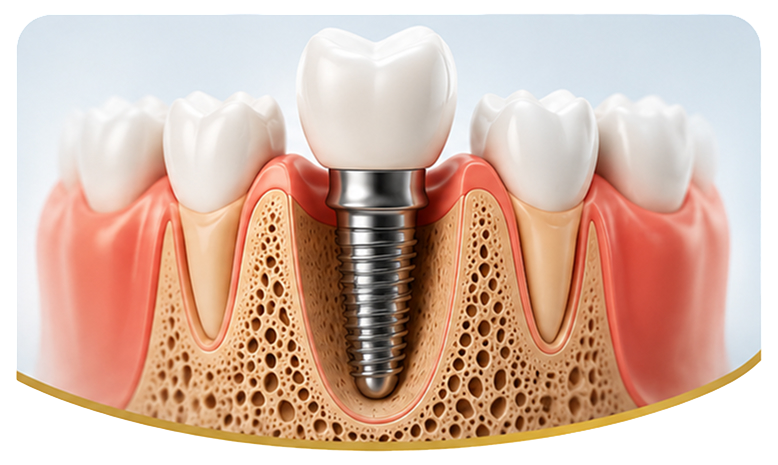
The completed restoration generally consists of three parts:
- The dental implant placed in the jaw
- An abutment that connects the implant and restoration
- A custom dental crown designed to blend with your smile
- Your crown is planned to complement the shape, shade and proportions of your surrounding teeth
Multiple Dental Implants
When several teeth are missing, individual implants or an implant-supported bridge may be recommended. An implant-supported bridge can replace multiple adjacent teeth while using strategically positioned implants for support.
Full-Arch Dental Implants
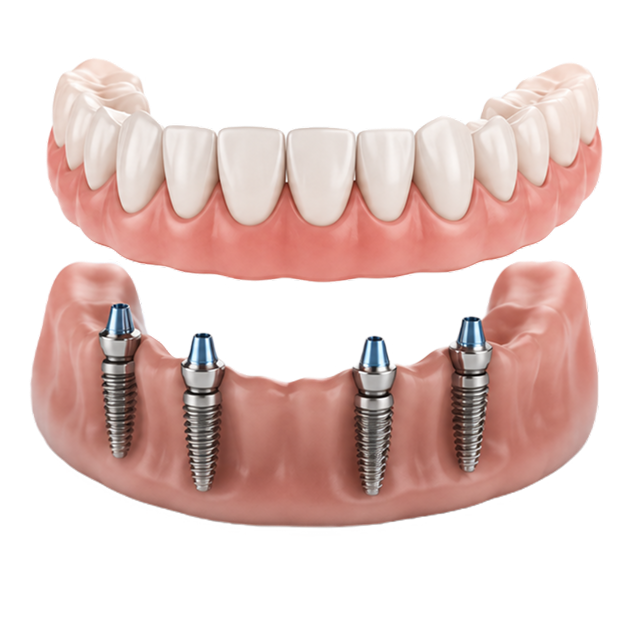
Full-arch implant treatment can replace an entire upper arch, lower arch or both arches of teeth. A carefully planned number of dental implants is used to support a complete fixed or removable restoration.
This treatment may be appropriate for patients who
Are missing most or all of their teeth
Have several severely damaged or failing teeth
Struggle with loose conventional dentures
Want to explore a more stable full-arch solution
Require comprehensive reconstruction of their smile and bite
Benefits of Replacing Missing Teeth With Dental Implants
Dental implants may offer several benefits when they are appropriate for the patient.
They can help:
- Restore a missing tooth without relying on adjacent teeth for support
- Improve the stability of a dental prosthesis
- Re-establish chewing surfaces
- Support natural-looking crowns, bridges or dentures
- Maintain function in areas affected by tooth loss
- Improve confidence when smiling and speaking
- The specific benefits and limitations of treatment will be discussed during your consultation.
Who May Be a Candidate for Dental Implants?
You may be considered for implant treatment if you have one or more missing teeth, damaged teeth that cannot be restored, or difficulty wearing conventional dentures.
Factors considered during your assessment include:
- General health
- Oral hygiene
- Gum health
- Available jawbone
- Smoking or vaping
- Diabetes control
- Medications
- History of radiation therapy
- Grinding or clenching
- Ability to attend follow-up and maintenance appointments
Implant-Supported Dentures
Dental implants can be used to improve the support and retention of a removable denture. Implant-supported dentures may feel more secure while eating and speaking than conventional dentures that rely primarily on suction or adhesive.
Bone Grafting for Dental Implants
Adequate bone is important for supporting a dental implant. Bone loss may occur after a tooth has been missing, because of gum disease, infection or previous trauma.
Sinus Augmentation
Dental Implant Restoration and Maintenance
Dental implants, planned before a single instrument moves.
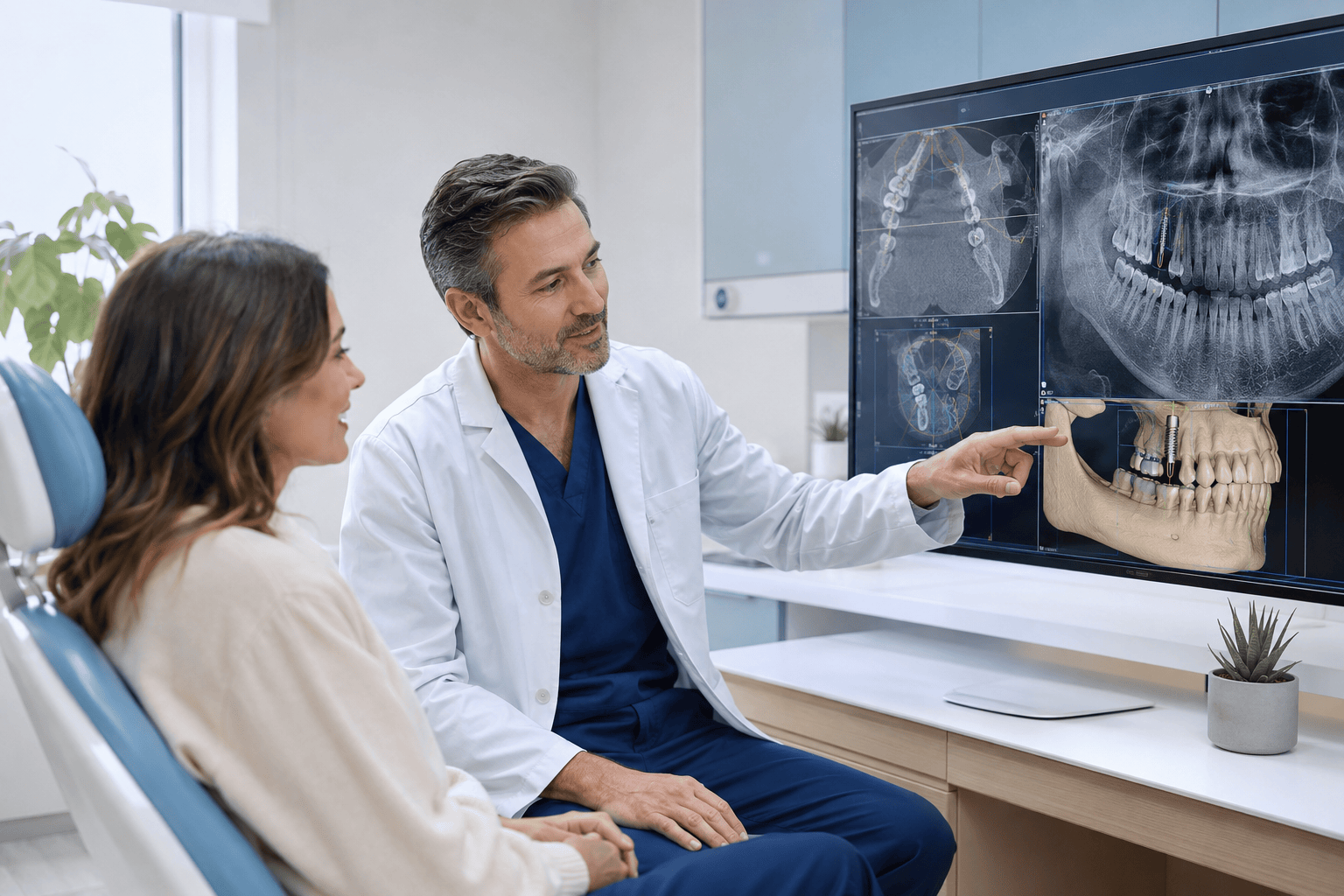
Four technologies, one coordinated plan
3D CBCT imaging
Digital intraoral scanning
Virtual implant planning
X-Guide navigation
CBCT imaging, done on site
Unlike a standard two-dimensional dental X-ray, CBCT imaging lets the dentist examine the proposed implant area from multiple angles — in three dimensions, not one flat plane.
Because the CBCT machine is located in our Calgary offices, imaging and planning are coordinated within your implant visit, without an outside referral.
- Height, width and shape of the available bone
- Position of nearby tooth roots
- Location of nerves and other anatomical structures
- Relationship between the upper jaw and sinus
- Areas of infection or bone loss
- Potential implant dimensions and placement angles
- Whether bone grafting may be required
A 3D scanner, in place of the tray
Our intraoral scanner captures detailed digital images of your teeth and gums, assembled into a three-dimensional model of your mouth — reducing or eliminating traditional impression trays in many cases.
Planning the implant with the final restoration in mind is the goal: a result built for function and appearance together.
- Assess your teeth and bite
- Plan the final position of the replacement tooth
- Design an implant crown, bridge or full-arch restoration
- Communicate directly with the dental laboratory
- Combine restorative information with CBCT data
- Help you understand the proposed treatment
X-Guide dynamic 3D navigation
X-Guide works with cone beam imaging and implant-planning software to provide live three-dimensional guidance during surgery.
X-Nav Technologies describes the system as functioning similarly to GPS navigation for the dental handpiece.
Unlike a static surgical guide, dynamic navigation lets the dentist view instrument movement on screen in real time — transferring the digital plan into the appointment while still responding to what the case actually presents.
- Follow the planned implant location during surgery
- Monitor implant position, angle and depth in real time
- Coordinate CBCT data with digital restorative planning
- Plan around each patient's unique anatomy
- Place guided implants without waiting on a manufactured guide
- Support cases from a single implant to full-arch reconstruction
The dental implant process, step by step
01
Consultation
02
Examination & digital records
03
Personalized implant planning
04
Preparatory treatment, when required
05
Implant placement
06
Healing & integration
07
Final restoration
08
Long-term care
Cost of dental implants
- Number of implants required
- Type of implant restoration
- Whether a tooth must be removed
- Need for bone grafting or sinus augmentation
- Use of temporary teeth
- Materials selected
- Complexity of the surgery
- Your dental insurance coverage
Understanding your estimate
Dental insurance may cover certain portions of treatment, but coverage differs significantly between plans. Our administrative team can help you understand your estimate and submit the appropriate information to your insurer.
Payment plan options are available and can be discussed based on your treatment plan and individual needs.
Why are full mouth dental implants considered a better long-term option than traditional dentures?
Because of this difference in design, implants offer several long-term advantages over traditional dentures
Ready To Restore Your Smile?
Frequently Asked Questions About Dental Implants
Get answer to the most common questions about dental implants,
the procedure, recovery, and what to expect.
A dental implant is a small titanium post placed into the jawbone to act as an artificial tooth root. Once it has healed and fused with the bone, a custom crown, bridge, or denture is attached on top, giving you a replacement tooth that looks, feels, and functions like a natural one.
The treatment area is thoroughly numbed with local anesthetic during dental implant placement. Sedation options are also available for patients who feel anxious, prefer additional comfort or are undergoing a more complex procedure.
Some swelling, tenderness or bruising may occur after surgery, and the level of discomfort varies from patient to patient. You will receive detailed post-operative instructions to help manage your recovery and support proper healing.
Your dentist will discuss the available sedation options (oral sedation, nitrous oxide or IV sedation). with you and recommend the most appropriate approach based on your health, comfort level and treatment needs.
The complete dental implant process may take several months, particularly when the implant needs time to heal and integrate with the jawbone before the final restoration is attached.
Some cases can be completed more quickly, while treatments involving bone grafting, infection, multiple implants or full-arch restoration may require additional stages and healing time.
Although treatment timelines can change depending on healing and clinical findings, your expected treatment stages and estimated completion timeline will be discussed during your initial consultation.
Guided implant surgery uses three-dimensional imaging and digital planning to assist with implant placement. Our office uses X-Guide Dynamic 3D Navigation, which displays live guidance during surgery to help the dentist follow the planned implant position, angle and depth.
A regular dental X-ray produces a two-dimensional image. A CBCT scan creates a three-dimensional view that allows the dentist to examine the implant area from different directions and assess bone and nearby anatomy.
Yes, dental implants can be used to support a complete upper or lower arch. The appropriate number and arrangement of implants depend on your anatomy, health and planned restoration.
Possibly. Some patients with bone loss can receive implants after bone grafting or through an alternative implant plan. A CBCT scan is needed to evaluate the amount and location of the available bone.
Age alone does not determine eligibility. General health, oral health, bone condition and ability to heal are usually more important considerations.
Coverage varies by dental plan. Some plans contribute toward portions of the surgery or restoration, while others provide limited or no implant coverage. We can prepare an estimate for submission to your insurance provider.
You do not have to make a treatment decision before meeting with us. Your consultation is an opportunity to understand the condition of your teeth and jaw, compare your options and ask questions about the implant process.
At Calgary Dental Implants, our Calgary implant team combines personalized care with in-house CBCT imaging, digital 3D scanning and X-Guide Dynamic 3D Navigation.
Contact us to learn whether a single implant, implant-supported bridge, implant denture or full-arch treatment may be appropriate for you.
- Traditional dentures rest on top of the gums and rely on suction, adhesives, and the shape of the mouth to stay in place. Full mouth dental implants are supported by titanium posts that are surgically placed into the jawbone, where they fuse with the bone to create a stable foundation for replacement teeth.
- Because of this difference in design, implants offer several long-term advantages over traditional dentures:
- Stronger biting power: Implant-supported teeth can restore up to 90% of natural chewing function, while traditional dentures typically provide significantly less bite force.
- Bone preservation: Dental implants help stimulate the jawbone, reducing bone loss over time. Traditional dentures do not provide this stimulation, so the jawbone can gradually shrink.
- Improved stability: Implant-supported teeth are securely anchored and do not slip, click, or require adhesives like conventional dentures often do.
- Long-lasting solution: With proper care, dental implants can last for decades. Traditional dentures generally need to be relined, adjusted, or replaced every 5–7 years as the mouth changes over time.
- Lower long-term maintenance: Although implants require a higher upfront investment, many patients find they can be more cost-effective over the long term by reducing the need for denture replacements, adhesives, frequent adjustments, and other ongoing maintenance.